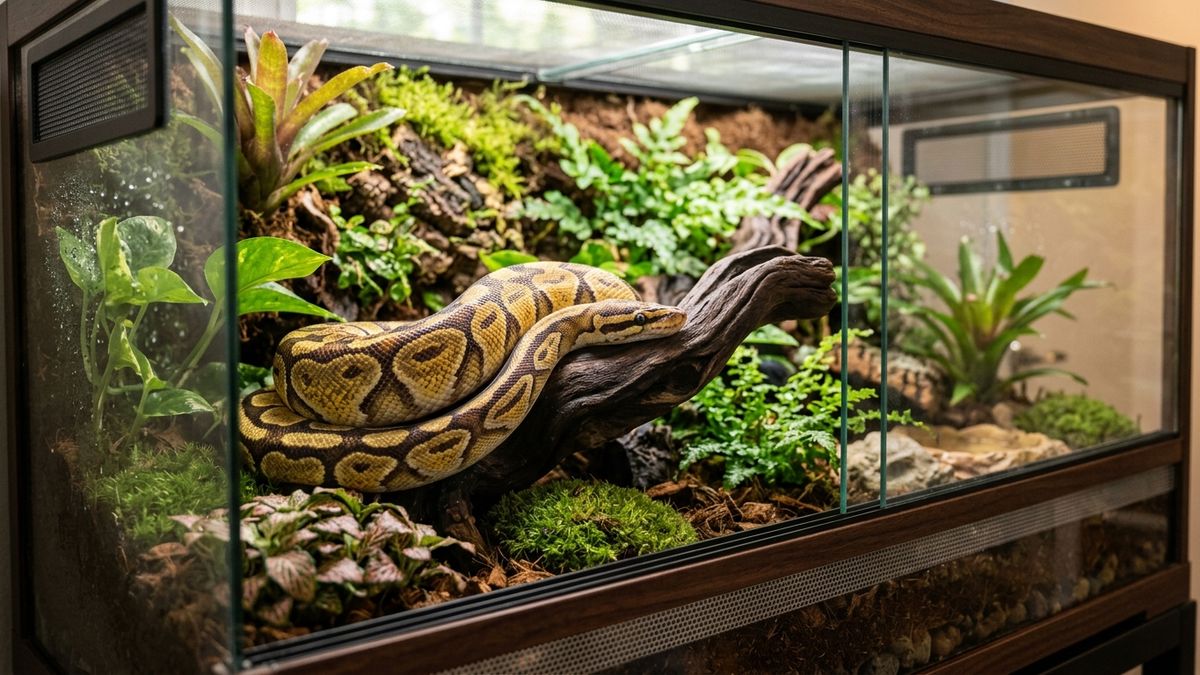
Ball Python Pet Care in Nigeria: Enclosures, Humidity, Feeding and Safety
Native to West Africa yet misunderstood. A complete guide to keeping captive-bred Ball Pythons in Nigeria: vivarium temperature control, shedding humidity, feeding, and reptile vets on PetMap.
The Ball Python (Python regius), also known as the Royal Python, is native to the savannahs and grasslands of West and Central Africa—including regions of Nigeria, Benin, Ghana, and Togo. Despite centuries of cultural superstition and fearful myths, the Ball Python is one of the most docile, gentle, and low-maintenance exotic companion animals on the planet.
Their name originates from their instinctive defense mechanism: when frightened, they do not strike or bite; instead, they curl tightly into a harmless ball with their head protected securely in the center.
Choosing Captive-Bred vs Wild-Caught Specimens
The most crucial rule when keeping a Ball Python in Nigeria is: **never capture a wild snake from your compound or bush.**
- **Wild-Caught Hazards**: Wild pythons carry severe internal and external parasites (ticks, lungworms, nematodes), harbor high stress levels, and often refuse frozen-thawed food, leading to slow starvation.
- **Captive-Bred Morphs**: Ethically produced, captive-bred morphs (such as Pastel, Piebald, Banana, Albino, or Enchi) have lived under human care for generations. They are already habituated to human handling, free of wild ticks, and reliably feeding on standard prey.
Enclosure Setup: Temperature & Nigeria's Climate Advantage
Because Nigeria's ambient tropical temperature is naturally warm, keeping Ball Pythons here is easier and more energy-efficient than in cold European or North American climates. However, precise microclimates within the enclosure remain essential:
- **Enclosure Type**: A front-opening PVC terrarium or secure wooden vivarium holds humidity far better than an open wire cage. Pythons are escape artists; ensure the vivarium features sliding glass locks or robust latches.
- **The Temperature Gradient**: Your snake needs a Warm Side (31°C to 33°C / 88°F to 91°F) using an under-tank heat mat regulated by an external digital thermostat, and a Cool Side (25°C to 27°C / 78°F to 80°F).
- **Two Identical Hides**: Place one opaque hide box on the warm end and an identical one on the cool end. Snakes should never have to choose between feeling secure and regulating their internal body temperature.
Humidity: Navigating Wet Season vs Harmattan
Ball Pythons require 55% to 65% baseline relative humidity, increasing to 70% to 80% during shedding cycles:
- **Rainy Season Management**: In Lagos or southern coastal areas, ambient humidity often reaches 80%+. Ensure adequate vivarium ventilation to prevent damp mold or fungal scale rot. Use absorbent coconut husk (Coco Coir or ReptiChip) as substrate.
- **Harmattan Protection**: The dry harmattan air can cause incomplete, patchy shedding (stuck shed), especially over the eye caps (retained spectacles). Provide a humid hide filled with damp sphagnum moss during this dry season.
Feeding Protocol: Frozen-Thawed Rodents
Pythons are strict carnivores:
- **Appropriate Prey Size**: Feed an appropriately sized mouse or rat pup whose circumference is equal to or slightly smaller than the widest part of the snake's body.
- **Safety First (Frozen-Thawed)**: Never feed live adult rats. A live rodent fighting for its life can inflict horrific bite wounds or blinding scratches on a placid python. Thaw frozen rodents thoroughly in warm water (38°C) before offering them with long metal feeding tongs.
- **Feeding Frequency**: Hatchlings and juveniles eat every 5 to 7 days; adult ball pythons thrive on a meal every 10 to 14 days.
Dispelling Nigerian Myths & Finding Reptile Doctors via PetMap
In Nigeria, traditional folklore often associates snakes with bad omens. In reality, a captive-bred Ball Python is non-venomous, clean, odorless, and completely harmless when handled with care. Keep your enclosure secure and private to avoid startling household guests or housekeepers.
Should your snake ever experience a respiratory infection (wheezing or bubbling mucus) or difficulty shedding, access verified veterinary support via PetMap. The PetMap.ng directory highlights veterinary professionals with exotic and reptile experience across Lagos, Abuja, and surrounding regions.