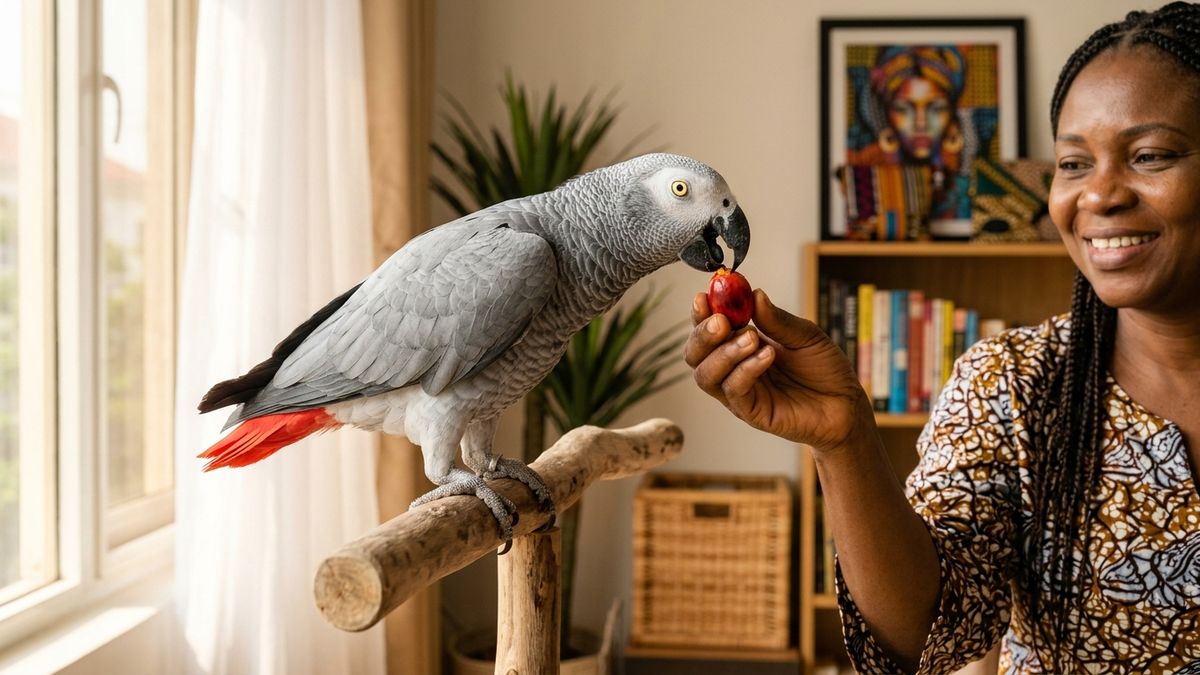
How to Train an African Grey Parrot to Talk: A Nigerian Caregiver's Masterclass
Unlock the extraordinary vocal and cognitive potential of your Congo African Grey. Proven speech training techniques, pidgin vocabulary, diet motivation, and avian health via PetMap.
The African Grey Parrot (Psittacus erithacus)—particularly the Congo African Grey native to the dense rainforests of Central and West Africa—is globally celebrated as the Einstein of the avian world. With the cognitive intellect comparable to a 5-year-old human child and the emotional development of a toddler, an African Grey does not merely mimic sound like a tape recorder; they learn to associate words with genuine context, people, and emotions.
If you share your home with an African Grey in Nigeria, here is how to guide their vocal development successfully without causing behavioral stress or chronic screaming.
Understanding the Talking Timeline
Owners frequently ask: "My African Grey is six months old, why isn't it talking yet?"
- **Babbling Stage (4 to 9 Months)**: Young greys first master household sound effects: microwave beeps, generator starter clicks, phone notifications, and door squeaks. They will practice "muttering" softly under their breath when covered for sleep.
- **First Clear Words (9 to 14 Months)**: Meaningful human speech typically crystallizes around their first year, although some precocious birds start earlier.
- **Sentence and Contextual Mastery (2+ Years)**: As the bond deepens, an African Grey will start using phrases appropriately—saying "Good morning" only when the cage cover comes off, or "Bye bye" when you pick up your car keys.
The Model/Rival Training Method
The most effective psychological method for training African Greys is Dr. Irene Pepperberg's famous "Model/Rival" technique:
- **Two Humans and One Bird**: Involve another person in your household. Sit near the parrot's perch.
- **Demonstrate the Reward**: Have the second person hold up a prized treat (such as a piece of walnut or a fresh African oil palm nut).
- **The Dialogue**: Ask your partner: "What do you want?" The partner clearly replies: "Walnut!" Hand the walnut to the partner with enthusiastic praise.
- **Create the Rivalry**: The parrot observes that using the specific word unlocks the delicious prize. When the bird makes an attempt at the vocalization, immediately reward the bird instead. This teaches contextual meaning far faster than repeating words into an empty room.
Selecting High-Value Nigerian Rewards
Birds do not work for free. Reserve their absolute favorite delicacies strictly for training sessions:
- **Red Palm Fruit (Banga / Kpukpuru)**: In the wild, African Greys thrive on the oily, vitamin-A-rich orange flesh of oil palm nuts. Thoroughly washed, raw palm nuts are high-value gold.
- **Shelled Walnuts & Almonds**: Break raw, unsalted nuts into tiny pea-sized bits so training isn't halted while the bird chews a giant piece.
- **Fresh Fruits**: Thin slivers of sweet Nigerian pawpaw (papaya), mango, or pomegranate seeds.
Nigerian Phrases and Household Contexts
Connect words to real-world actions so the bird understands their function:
- **Greetings**: Say "Kedu", "Bawo ni", "Sannu", or "Good morning" exclusively when entering the room in the morning.
- **Visitor Alerts**: When someone rings the gate bell or knocks on the door, consistently ask: "Who is that?" Soon, your grey will announce visitors before you reach the intercom.
- **Food Announcements**: Always name items as you offer them: "Take apple", "Want water", or "Delicious".
What NOT to Do: Common Speech Training Mistakes
- **Do Not Play Audio Loops on Repeat for Hours**: Leaving an audio recording playing on loop while you are at work creates auditory burnout. The bird tunes out the monotonous noise, and it can provoke frustration screaming.
- **Never Reward Screaming with Attention**: If your parrot screams ear-piercingly, do not run into the room, yell at it, or offer food. In a parrot's mind, dramatic human drama is a rewarding reaction. Turn your back and leave the room until silence resumes.
- **Avoid Toxic Fumes**: Remember that birds have delicate air sacs. Never train your bird in a room with mosquito coil smoke, generator fumes, perfume sprays, or non-stick Teflon cookware fumes.
Avian Health Checkups via PetMap
Speech development requires a physically healthy, unstressed bird. A parrot suffering from calcium deficiency, vitamin A deficiency, or respiratory irritation will withdraw into silence.
Finding an avian-experienced veterinary doctor in Nigeria can be difficult because traditional pet care historically focused on canines. Fortunately, PetMap helps bird owners locate specialized veterinary practitioners with avian diagnostic tools across Nigeria. Through PetMap.ng, you can easily book routine beak-and-feather checks, fecal parasitology tests, and microchip or closed-ring registrations with verified clinics.